
Claiborne Parish Blotter Sources
Start with the sheriff. CPSO publishes no 72-hour, weekly, or rolling arrest log. Its News & Events archive carries selected investigations, arrests, community events, and dated warrant material. There is no fixed cycle, no stated depth, and no table of everyone booked. A release records an agency action, nothing more. For a multi-day view, the Claiborne Parish Journal's periodic Arrest Reports come closest. Entries typically list the arrest date, name, agency, charge, and sometimes a bond amount. Law enforcement supplies the data, the paper says. It is dated news, not the jail record. For who is in custody now, LAVNS owns that answer. The Clerk owns the case outcome.
Read Claiborne Arrest Reports Carefully
Check the event date first, not the headline date. One Claiborne article may fold together arrests made by CPSO, Homer Police, Haynesville Police, Louisiana State Police, or another agency entirely. Publication tells you nothing about when jail intake finished or how long custody lasted.
- Open a dated sheriff release or Journal Arrest Report.
- Record the arrest date, name, agency, and alleged charge.
- Keep a stated bond separate from the charge and outcome.
- Check LAVNS for current parish custody.
- Use ClerkConnect for the later case disposition.
- Request the agency record when web detail is insufficient.
Do not assume a photo in an article is a booking photograph. The Journal sets no consistent photo policy, and the roster carries no photo column at all. For a fresh-booking check, the Arrests Last 24 Hours page walks through it.
Claiborne Blotter Entry Fields
Periodic reports add more context than the public roster does, but the fields shift from one batch to the next. Read only what is printed, then confirm key facts with the source office.
| Reported item | Proper reading |
|---|---|
| Arrest date | Date attributed to arrest, distinct from publication. |
| Name | Identity reported by the outlet. |
| Agency | Office credited with the action. |
| Charge | An charge, not a conviction. |
| Bond, when included | A reported condition, not promised release. |
| Image | Not an official mugshot unless its source proves that. |
The LAVNS roster takes a different approach. It lists name, date of birth, race, gender, and arrest date. It is not a historical log. A news entry can linger after a person's release while a roster name rolls off, so the two records simply serve different purposes.
Claiborne Weekend Posting Limits
CPSO has no stated weekend, holiday, or Monday catch-up rule. The Journal's samples follow a rough weekly rhythm, but the paper promises no issue in any given week. Timing hinges on when the agency delivers data and when editors publish. So a weekend arrest might surface late. It might appear only in LAVNS. Or it might never make the news. A quiet archive proves nothing. For a known person, check the roster. Then call the agency directly. For a wider span, request records by date range. Selected releases alone cannot support a real arrest total or trend.
Note: Publication bunching may occur, but no official Claiborne schedule guarantees a post-weekend update.
Older Claiborne Arrest Archives
CPSO keeps no historical booking archive online and publishes no photo-retention schedule. Louisiana R.S. 44:36 ties preservation to statute or an approved schedule. Some circumstances carry a three-year minimum. That applies when nothing else governs. That does not guarantee every item stays online or reaches State Archives.
For old records, send a precise certified-mail request to CPSO records liaison Marla Rowe. The address is 300 Highway 146, Homer, LA 71040. Include the name, the date range, the record type, and whether you want a photo. Ask whether the record still sits with CPSO. Ask whether it moved, transferred, or was disposed of under an approved schedule. Listed fees run $1 per page for exact-document copies. Legal-redaction copies cost $3 per page. Confirm which applies before you send payment.
For court outcomes, ClerkConnect holds parish criminal files from 2002 forward. It can show what happened after a roster entry vanished. State Archives explains schedules but does not automatically hold each sheriff record. The Claiborne arrest-record guide maps the wider chain.
Local News Adds Arrest Context
For periodic lists, the Journal stands as the strongest local source around. Homer and Haynesville both turn up in its samples. CPSO and other agencies appear there too. Regional coverage leans toward selected major cases, not every parish booking. The historical Guardian-Journal briefs page offers one older archive lead.
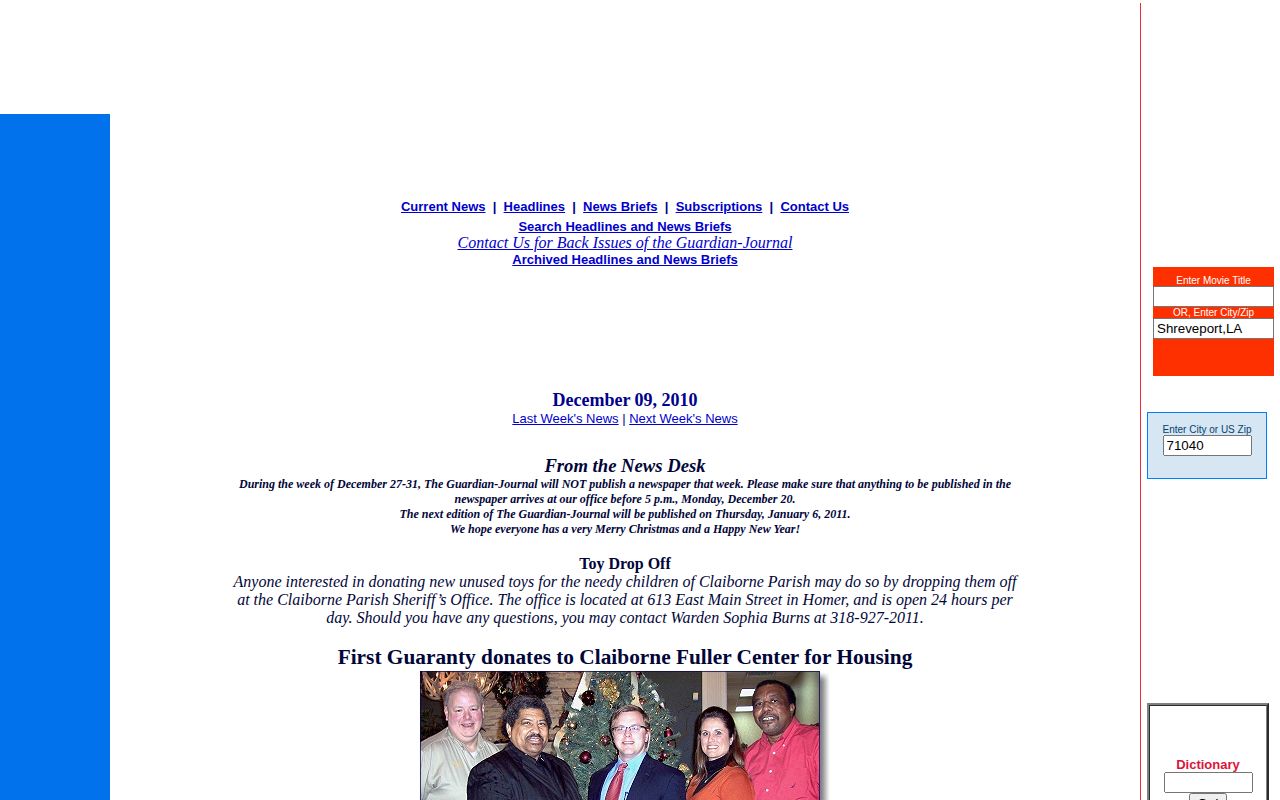
That dated page is no live booking feed. The official CPSO News & Events archive shows the sheriff's selected-release format.
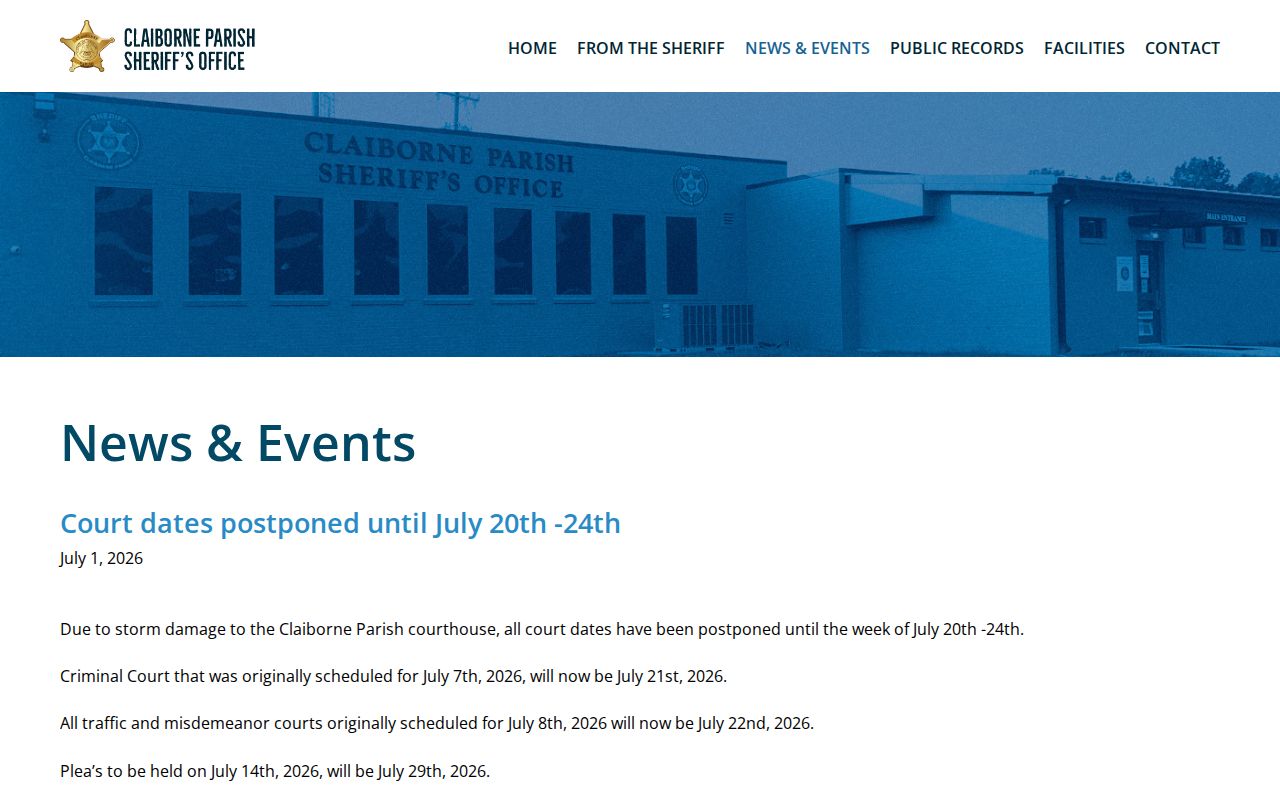
The archive is authoritative for each release, but not a full log.
Claiborne Enforcement Releases Differ
A CPSO press release may announce an arrest days after the surrender or extradition took place. Dates rarely line up. The event, the booking, and the publication can each carry a different date. Warrant material dated in advance serves another purpose. It is not a count of completed arrests. A Homer or Haynesville officer may write the incident report while the parish jail builds the custody record. Louisiana State Police can add yet another layer.
Write down exactly what conflicts. A misspelled name, a charge label, an arrest date, a facility, and a final result may sit with five different custodians. The agency holding the incident report is not always the facility that accepted custody. Ask each one about its own field. One office cannot correct another office's file. Extra detail in a news story does not make that story the controlling custody or court source.
The CPSO roster drops people after release or transfer. An old article stays indexed anyway. That gap means the article is not a live custody status. The reverse happens too. Someone can appear in the roster with no sheriff release at all, since the archive is selective. The newest publication date does not always answer the current question.
Blotter Charges Are Accusations
A blotter label is only the start. Prosecutors can decline a charge or amend it, and a court can dismiss it outright. For the real outcome, check the Claiborne Parish Clerk. Do not just repeat the first booking label. A disposition is the court's recorded resolution. It can arrive long after the blotter item originally ran.
Some records are simply closed. Juvenile files, expunged cases, and active investigations may all be restricted. An item missing from a search can reflect that policy. It may not mean a failure to find it. The right response is a focused official inquiry, not an attempt to rebuild protected details from unrelated reposts.
Verify Claiborne Blotter Details
When following up, keep the title, date, and agency name handy. Ask whether the office can provide the arrest report or the booking sheet. The case number is another item worth requesting. Each is a different record. A precise request helps the custodian find the right file. It keeps a selected news list from becoming a claim about every parish arrest.